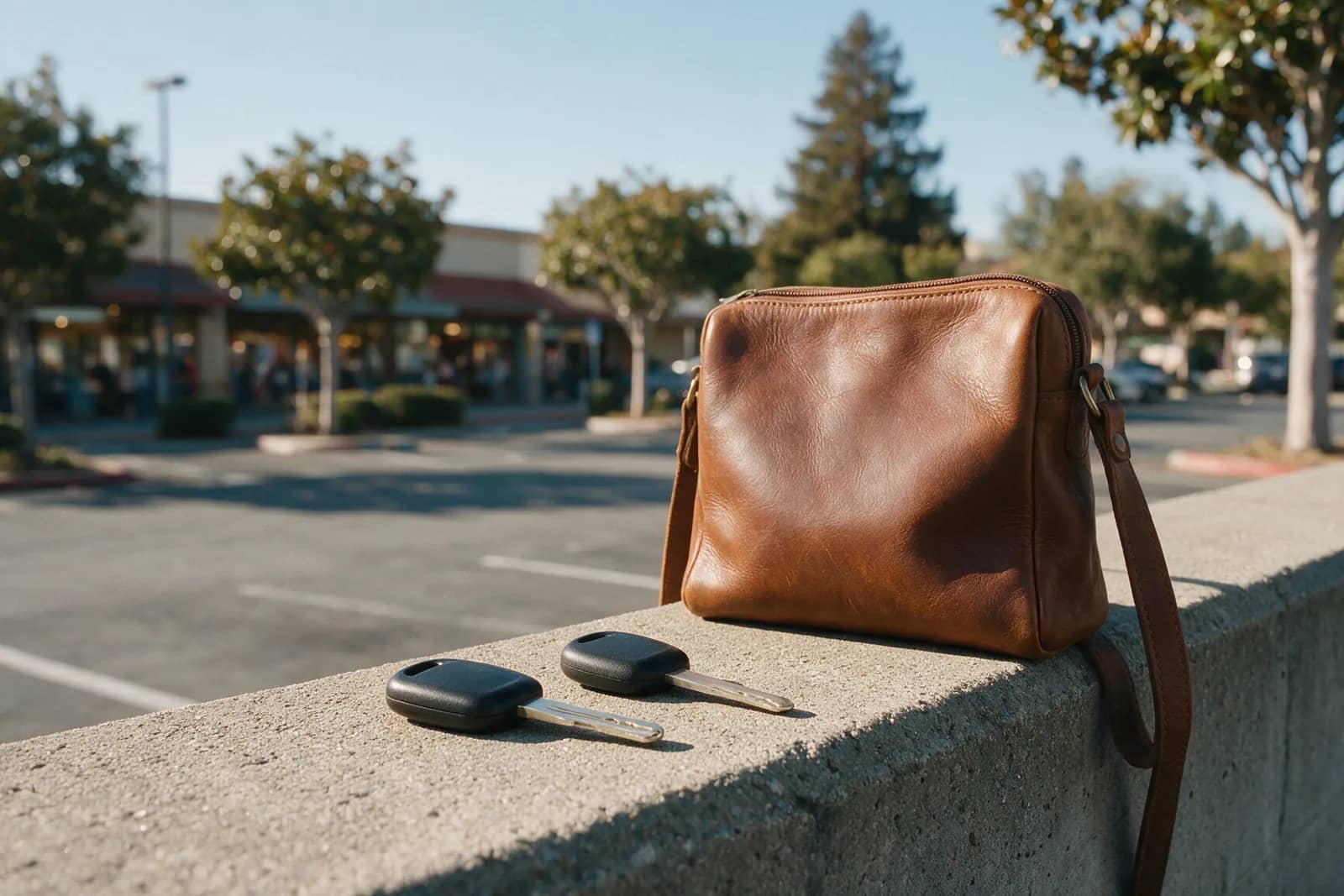
Three calls from the same lot
The lots at Stanford Shopping Center produce three different calls that sound alike on the phone. The first is a key or a fob inside a locked car: on the seat, in a coat, in the trunk under the shopping. That is a car lockout at $105 to $199, and the range is about the vehicle rather than the lot. The second is a key that is not in the car at all, dropped between a fitting room and the parking row, and that is a replacement at $155 to $419, cut and paired to the car beside the car. The third is a fob that the car has stopped hearing, which is nearly always a coin cell and sometimes a fob programmed at $89 to $195.
Which of the three it is decides what leaves the van, so it is the first question on the call. Arrival to the Shopping Center is about eighteen minutes from Midtown by way of Embarcadero and El Camino, and the same figures apply at Town & Country Village across the road and in the Caltrain lots along Alma Street.
Saying which lot you are in
The Shopping Center has no single lot; it has a ring of them, each known by the store it faces, with a garage at one end and the El Camino side at the other. Say which store the car is nearest, whether it is on the El Camino side or the Sand Hill side, and whether it is under cover. A photo of what is through the windshield settles it faster than any description. Town & Country is one lot with a row of shops on three sides, and the shop nearest the car is enough. The Caltrain lots are long and numbered by row, and the row plus the nearest light pole finds the car.
Then stay with the car. A technician who reaches the row while the owner has walked back inside for a coffee loses ten minutes for both of you. After nine at night, say whether the garage ramps are still open; if they are not, the van stops on the street and the case walks in through the stair.
What is asked on the call
Two things: the year, make and model, and whether you can see the key inside. An older sedan with a simple linkage opens in a minute or two. A new SUV with tight seals and deadlocking that disables the inside handle takes longer and sits at the upper end of $105 to $199. A key visible inside is a lockout; a key that is nowhere is a replacement, and the difference is a few hundred dollars, so it is worth a look under the seat before the call.
Before the door is opened, the registration or an insurance card and a matching ID are asked for. If they are inside the locked car, say so; the plate is checked against the registration on your phone instead. It takes a minute and it is the reason a technician should be willing to open a car in a shopping center lot at all.
A key cut and paired in the lot
A lost key on a car built after the late 1990s is two jobs. The blade is cut to the car's code, read from the door lock or from the vehicle record, on the machine in the van. Then the chip in the new key, or the new fob, is introduced to the immobilizer through the diagnostic port so the engine will start for it. Both happen beside the car, and for most makes the whole visit is under an hour. A dealer does the same work with the car towed to them and a wait of days; which makes the van can pair, and which handful of the newest still have to go to a dealer, is said on the call.
If the lost key is the only key, the old key is deleted from the car's memory at the same time so that whoever finds it in the parking row cannot start the car. That is said on the call and noted on the receipt.
The calls that are not a locksmith
Some calls from the lot are not about keys. The key turns and nothing happens: that is the twelve-volt battery, and the answer is a jump from a neighbor or roadside service, not a van full of picks. The key will not turn at all: the steering lock is set against a wheel that was turned when the car was parked on the sloped side of the lot; rock the wheel gently while turning the key and it frees. The fob works at the door and not at the ignition: coin cell, tried before anything is programmed.
Where the key goes in, turns partway and stops every time, that is a worn ignition, repaired at the car at $185 to $459. It is diagnosed from the description on the call so that the right parts come out and nobody pays for a lockout that was a battery.
Evenings, the receipt and the spare
Between 8pm and midnight the $55 evening supplement sits inside the figure said on the call, and $90 sits inside it after midnight. Payment is card or tap at the car, and the itemized receipt reaches your email while the technician is still at the car. If for any reason a car cannot be opened that night, the technician says why in plain words and what the lot does with a car left overnight, which at the Shopping Center is a note on the windshield and nothing worse.
Two habits end most of these calls: a photo of the store sign when you park, and a spare key cut in daylight at the same $155 to $419 and kept at home. Tall Tree Lock & Safe works to the Tall Tree Standard: one figure is said on the call, covering the visit, the labor and the parts, and that figure is on the receipt; the door is opened without damage; the hardware and the key type are named before anything is fitted; and payment is card or tap at the car with an itemized receipt by email.
Quick answers
What does it cost to get into a locked car at Stanford Shopping Center?+
$105 to $199 depending on the vehicle, with $55 inside the figure between 8pm and midnight and $90 after midnight. The $89 service call is already inside that figure, and the figure is said on the call.
I lost the only key somewhere in the store. Can a key be made in the lot?+
For most makes, yes. The blade is cut to the car's code on the van and the chip or fob is paired to the immobilizer through the diagnostic port, at $155 to $419, beside the car. The lost key is deleted from the car's memory in the same visit.
The fob stopped working in the garage. Does it need programming?+
Usually not. A fresh coin cell is tried first. If the fob still is not heard, a replacement is programmed at $89 to $195 at the car.
Need it handled rather than read about?
(650) 252-1604More guides